The 2026 Shift in Digital Finance: From Bitcoin to 'Betcoin', and How AI Payments Are Reshaping Financial Trading

In 2026, a quiet restructuring is happening across crypto and digital finance.
Bitcoin, once the symbol of crypto, is still an important asset. But after pulling back sharply from its October 2025 highs, it has spent the spring of 2026 trading well below the peak euphoria. Fortune reported the Bitcoin price at around $76,000 on April 30, 2026 — a large drop from the October 2025 high.
This does not mean the crypto market itself is ending. It means the role of money is starting to split.
On one side, there are “prediction markets” where people bet on real-world events. On the other side, there are “stablecoin payments” used between AI agents, APIs, and digital services.
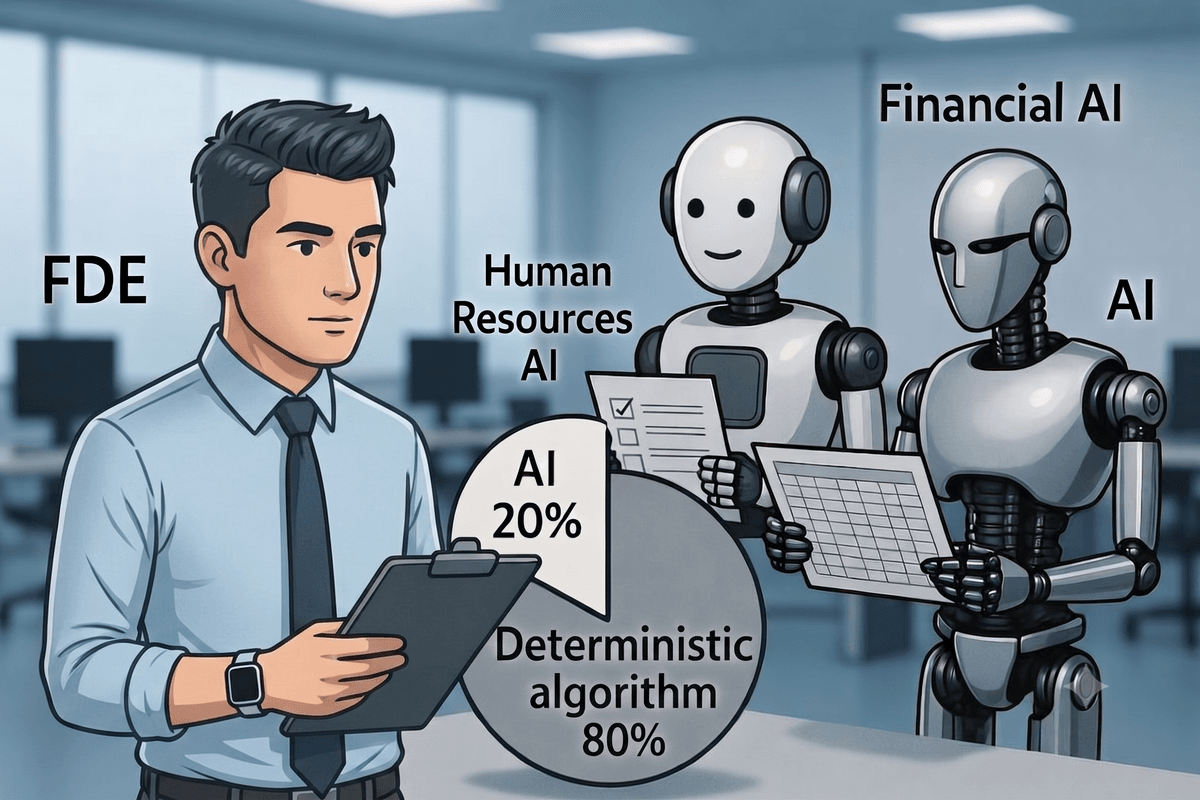
In other words, crypto is moving away from the simple question of “will Bitcoin go up or down?” and starting to split into two directions. One is prediction markets, which channel human speculative appetite toward real-world events. The other is the foundation being built for AI agents to trade directly with one another, without going through human operations or broker screens.
Recent moves
The first thing that stands out is the rapid growth of prediction markets.
TRM Labs says prediction markets crossed $20 billion in monthly volume in early 2026. GZERO also reports that volume across Polymarket, Kalshi, Limitless, Predict.fun, and others grew from about $1.2 billion at the start of last year to over $20 billion by January 2026.
The important point is that this should not be read simply as “a new investment market.”
Prediction markets sit on the boundary between financial products and gambling. In the US, there is an active legal fight over whether federal regulation or state gambling regulation takes priority over markets like Kalshi. Reuters reports the CFTC suing Wisconsin, and a separate dispute in Massachusetts over whether Kalshi’s sports-related contracts violate state gambling rules.
The US Senate has also passed a resolution banning senators and their staff from trading on prediction markets. Business Insider reported on this, and it shows that prediction markets are no longer just entertainment — they are starting to involve insider information, policy decisions, and questions of finance, politics, and ethics.
On the payments side, stablecoins and AI agent payments are also moving fast.
Cloudflare has started offering “Agentic Payments,” a way for AI agents to programmatically pay for resources and services using HTTP 402 Payment Required. Cloudflare has also been pushing “Pay per crawl,” a way to charge AI crawlers for access.
Stripe, together with Tempo, announced the Machine Payments Protocol (MPP). It is positioned as an open spec for AI agents and services to handle micropayments and recurring billing programmatically.
Within this trend, Tether announced a US-regulated stablecoin called “USA₮.”
According to Reuters, USAT is issued by Anchorage Digital Bank and designed to comply with the US GENIUS Act. The person confirmed in reports as leading USAT is Bo Hines, a former White House crypto adviser.
Hong Kong is also moving to set up stablecoins as part of the digital finance foundation. The Hong Kong Monetary Authority granted the first fiat-pegged stablecoin issuance license to HSBC, and to Anchorpoint Financial — a joint venture of Standard Chartered, HKT, and Animoca Brands. Reuters notes that Hong Kong is trying to build a regulated digital currency framework.
From Bitcoin to “Betcoin”
In my view, what matters most in this shift is not Bitcoin itself, but the change in where speculative money is going.
Until now, the crypto market has centered on price moves of tokens themselves — Bitcoin, altcoins, memecoins.
In prediction markets, however, the bet is no longer on the token.
The bet is on real-world events: elections, interest rates, sports, corporate events, AI model release timing, whether a recession arrives.
In this sense, speculative money is moving from “the price of a coin” to “real-world events.”
To use a slightly metaphorical phrase, this could be called a shift from Bitcoin to “Betcoin.”
I see this as an important structural change in financial markets, because part of the energy that used to flow into Bitcoin and memecoins is moving into markets that are closer to actual real-world events.
Bitcoin is becoming less of a payments tool and more of an asset whose price itself is the event.
In other words, Bitcoin is no longer the “currency you use.” It is becoming the subject of prediction-market-style conversations: “Will it cross $100,000?” “Will it set a new all-time high?” “Will the next round of monetary easing push it higher?”
I think Bitcoin will likely survive as digital gold, a macro asset, collateral, and a speculative target. But the chance of it becoming the main vehicle for everyday payments looks much lower than before.
Stablecoins as the bloodstream of the AI economy
In the AI agent economy, the kind of currency that is needed is completely different.
When an AI agent makes a payment, what it needs is not an asset that goes up in price.
What it needs is something with these properties:
- A stable price
- Support for small payments
- Natural integration with APIs and HTTP
- The ability to be executed automatically between machines
- Connections to regulatory compliance, identity verification, and audit systems
The thing that fits these conditions is not Bitcoin, but stablecoins.
Cloudflare’s x402 support, Stripe’s MPP, Coinbase’s x402, and the standardization moves involving Google and Mastercard are all trying to make “AI paying” something close to a standard internet capability.
I have written before about the broader fight over payments infrastructure for the AI agent era — see The Cryptocurrency After Bitcoin — The Battle for Financial Infrastructure in the AI Agent Era for more detail.
For context, x402 is an attempt to use HTTP’s “402 Payment Required” so that AI agents and APIs can settle small payments on the spot when accessing content or services. Coinbase is pushing x402 in combination with stablecoin payments.
Cloudflare’s x402 support can be seen as Cloudflare — sitting in front of websites and APIs — controlling access and charging AI crawlers and AI agents. In this model, Cloudflare is not just a CDN or security company, but a gateway that takes a “toll” in the AI era.
Stripe’s MPP (Machine Payments Protocol) is a payment protocol for AI agents and machines to pay each other. Instead of a human typing in a card number, it imagines a world where AI agents handle API fees, data costs, reservations, and purchases automatically within pre-set permissions.
The standardization work involving Google and Mastercard is about how to design “user intent confirmation,” “authentication,” “spending limits,” and “liability for misuse” — so that AI agents do not pay on their own without proper checks.
In other words, what is happening is not just an upgrade to crypto payments. Web access, API usage, authentication, micropayments, stablecoins, and card payments are all being redesigned around AI agents.
Wired also reports that as we move toward an era where AI agents pay on behalf of users, the FIDO Alliance, Google, Mastercard, and others are working on standards for authentication, user intent verification, and security.
An AI agent will pass through these payment specs and gateways to decide on data fetches, API calls, cloud computing, ad placement, logistics arrangements, and software execution. It will reach external services, pay a few cents to a few dollars on the spot, receive the result, and move on to the next step.
In this flow, the AI agent has to settle payments instantly, without breaks, accurately, and with the payer’s identity verified on the spot.
That is why edge platforms like Cloudflare, payment platforms like Stripe, crypto infrastructure companies like Coinbase, and authentication and payment standard players like Google and Mastercard are racing to capture the de facto standard for AI agent infrastructure.
The main battleground for AI-era digital finance has moved to how AI agents can pay safely, be authenticated, be audited, and balance all of this with user protection.
The role of brokers in question: the start of direct trading by AI agents
Another important point is that the role of “brokers” in financial trading is being redefined.
For a long time, brokers and trading platforms have played a central role in financial trading.
Investors look at prices, look at the order book, check the news, and place orders through their broker or trading app. Along the way, brokers have provided information, execution, access to liquidity, fees, and the user interface.
But once AI agents can decide, negotiate, and even settle trades on their own, this structure can change a lot.
A useful reference here is the analysis of Anthropic’s “Project Deal,” which was shared on X.
That post described a case where Anthropic built a small marketplace for internal use and let AI agents negotiate trades on behalf of participants. This was not a financial-trading experiment, but it was important because it showed that part of the human process — looking at a screen, finding a counterparty, comparing terms, negotiating prices — can be handled by AI agents.
Smart Money on X — analysis of Project DealI have also written about a world where AI agents trade directly. If you are interested, see The New World Driven by Multi-AI Agents: an Era Where AIs Review, Complement, and Negotiate with Each Other to Create Value.
The same idea applies directly to financial trading.
The functions a broker provides in financial trading can be broken down roughly into:
- Showing price information
- Connecting to counterparties and markets
- Executing orders
- Managing risk
- Settling trades
- Providing the user interface
Once AI agents can directly compare multiple markets, multiple liquidity pools, and multiple counterparties, investors no longer need to trade inside the screen of a specific broker.
If machine-facing payment protocols like stablecoins, x402, and MPP fall into place, AI agents can also do more than gather information. They can pay on the spot, post collateral, lock in trade terms, and even handle settlement.
In other words, parts of what brokers used to provide — the screen, the order book, the information, execution, settlement — could be absorbed into direct interactions between AI agents.
This does not mean brokers and exchanges become unnecessary in regulated securities trading. KYC, investor protection, clearing, audit, and the location of legal responsibility remain important.
But the front-end interface that users see will change.
Until now, a person opens a broker app, looks at the order book, and presses an order button. Going forward, the user gives conditions to an AI agent, and the agent compares multiple markets and trade routes and executes on the most reasonable path.
In that world, the value of a broker is no longer “providing the order screen.” It moves toward areas that support AI agent trading:
- APIs that AI agents can connect to
- Accurate market data
- Regulated execution infrastructure
- Safe settlement and clearing infrastructure
- Guardrails that control trading permissions
Seen in this context, the moves by Robinhood and Kraken are also interesting.
Robinhood is positioning prediction markets as a growth area, and has touched on preparations to launch a prediction-market-focused exchange called Rothera. This is a financial app with direct customer touchpoints reaching beyond order intake into product design, execution, and exchange-like layers.
Payward, the parent of Kraken, also announced the acquisition of Bitnomial, a US digital-asset derivatives company. This shows crypto exchanges expanding from simple trading venues into derivatives, clearing, and institutional trading infrastructure.
The important thing here is that AI agent payments and the vertical integration of financial trading are moving in the same direction.
For an AI agent to trade autonomously, market data, trading decisions, order execution, collateral management, settlement, audit logs, and permission management all need to be integrated.
The more that integration progresses, the more traditional brokers risk being pushed below the surface — out of the customer-facing position and into the role of execution infrastructure behind AI agents.
Put another way, in the future of financial trading, humans will not choose a broker. AI agents will choose the best execution route.
At that point, what matters to investors is not which app has the nicest screen. It is which infrastructure can process the AI agent’s trades cheapest, fastest, safest, and most compliantly.
In that sense, the main role of financial trading is moving from broker apps operated by humans to payment and execution infrastructure that AI agents connect to.
In an extreme case, you can even imagine AI agents trading peer-to-peer with each other, with no broker in between.
What enables this shift is stablecoins, x402, MPP, edge platforms like Cloudflare, crypto payment infrastructure like Coinbase, and payment protocols like Stripe.
Brokers and exchanges will not disappear quickly. But brokers that lose their direct touchpoint with the user — that touchpoint going to the AI agent instead — will find it hard to remain “the first app the investor opens.”
My view: finance splits into “human betting” and “direct trading between AI agents”
This part is my own view, but I think the essence of the 2026 shift in digital finance is that the crypto market is starting to split into two directions.
One is a market that more directly absorbs human speculative appetite. Here, prediction markets, event contracts, perpetuals, and meme-style price-volatility products will grow.
The other is a world where AI agents trade directly with one another. AI agents read market data, compare terms, negotiate with counterparties, and execute trades or payments when needed. That kind of financial trading is gradually becoming real.
In this picture, stablecoins, x402, MPP, Cloudflare’s edge billing, Stripe’s payments stack, Coinbase’s wallet and payment infrastructure, and regulated stablecoins are not the goal — they are the means. They become the foundation that supports a world where AI agents trade directly with each other.
The first area is about humans. The second area is about trading between AI agents.
These two look like extensions of the same crypto and fintech world, but their nature is completely different.
Prediction markets need liquidity, event design, regulatory compliance, risk management, and user acquisition.
Direct trading between AI agents, by contrast, needs low cost, instant settlement, authentication, audit, security, API friendliness, and agent permission management.
Humans bet on more real-world events, and the foundation for AI to trade automatically is being built. That bifurcation, in my view, is starting.
Another view: convenience widens the regulatory and ethical risk surface
That said, this trend should not be read with blind optimism.
Looked at as financial markets, prediction markets can be heavily exposed to insider information and sharp information asymmetries. Depending on the topic, they also get close to gambling, insider trading, political ethics, and even national security.
In the US, state governments, the CFTC, the SEC, and Congress are all starting to monitor prediction markets from different angles. Reuters reports that the SEC is delaying its review of ETFs linked to prediction markets and is asking for additional information on disclosures and risk structure.
The same applies to AI payments.
A world where AI agents can settle payments without a human in the loop is convenient, but it also raises new questions:
- Who approved that payment
- Who is responsible if the AI is hijacked
- How to stop unintended payments by children, elderly users, or company employees
This is exactly why Google, Mastercard, the FIDO Alliance, and others are working on standards for AI agent identity confirmation and authentication.
Digital finance progress is always a trade between convenience and risk. The same is true here.
AI payments and prediction markets widen the speed and reach of finance. But they also widen the surface area for regulation, ethics, responsibility, and security issues.
Wrap-up
The 2026 shift in digital finance is not a story of crypto ending. It is a story of crypto starting to split in two directions.
One direction absorbs human speculative appetite more directly. The energy that flowed into Bitcoin and memecoins is moving into prediction markets that bet on real-world events — elections, war, sports, AI model release timing.
In short, the center of speculation is moving from Bitcoin to Betcoin.
The other direction is AI agents trading directly with one another. Until now, humans looked at prices, placed orders, and settled trades through a broker or exchange screen.
But once AI agents can read market data, compare terms, negotiate with counterparties, and execute trades, the human and broker layer in front of financial trading starts to fade.
What is needed at that point is the payment, authentication, and billing infrastructure built by stablecoins, x402, MPP, Cloudflare, Stripe, and Coinbase. These become the foundation that supports a world where AI agents trade directly with each other.
Humans bet on more speculative real-world events. AI executes trading and settlement without any human in the middle.This bifurcation, in my view, is the picture finance is starting to show.
Join the conversation on LinkedIn — share your thoughts and comments.
Discuss on LinkedInRelated Posts
What API List Prices Don't Tell You About AI Subscriptions — OpenAI and Anthropic Usage Limits and Pricing Strategies, Seen by a Developer Who Runs AI All Day

Why AI Keeps Slipping Out of Control: What the OpenAI and Anthropic Incidents Show About the Difficulty of Containment