The Reality of 'Continual Learning' ― Can AI Truly Evolve on Its Own?
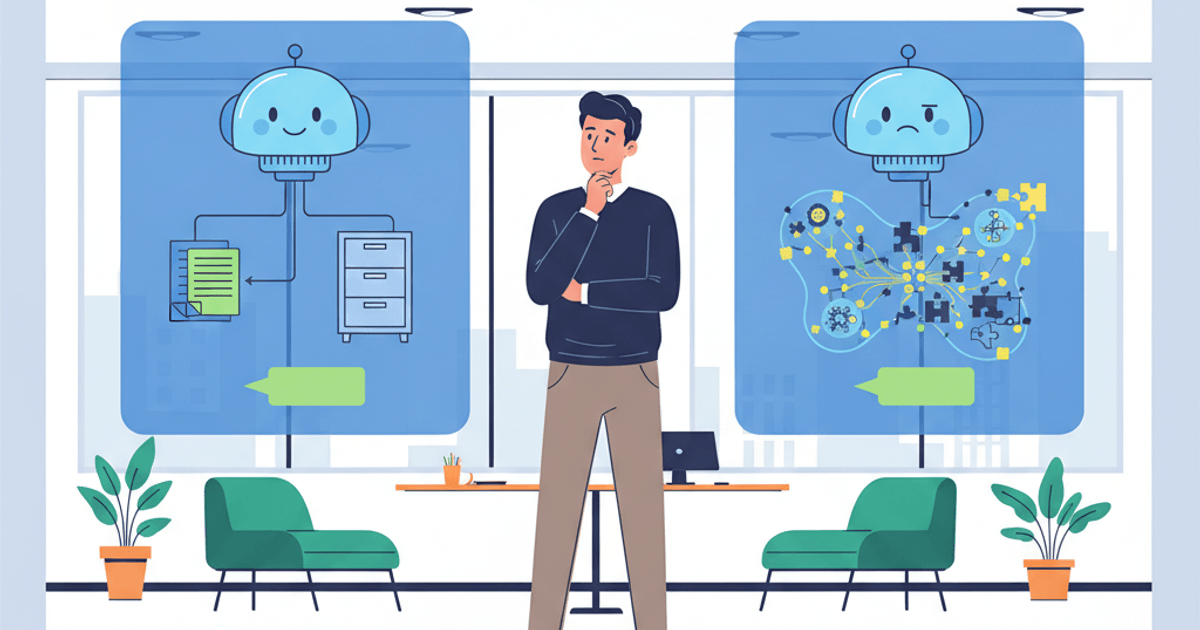
An AI that learns from daily experience and grows smarter on its own, just like a human. It’s a vision shared by engineers and investors alike, but recently, more and more services seem to be exploiting that expectation.
In this post, I draw on a recent report from The Information, titled “Don’t Get Tricked By Fake ‘Continual Learning’,” to explore how we can distinguish genuine self-learning from mere marketing claims.
Is That “Learning” Just Glorified Note-Taking?
According to the report, many startups tout “continual learning” or “self-learning” capabilities, but in most cases, what they offer amounts to operational workarounds rather than fundamental architectural evolution.
A “smart notepad” is not intelligence: The model’s core reasoning doesn’t actually improve. Instead, it simply stores user preferences in an external memory and retrieves them later. Agents like OpenClaw employ this approach, but having a memory is not the same as evolving intelligence.
Temporary fine-tuning: There’s also “test-time training,” a technique that makes minor adjustments while the model is running. However, these changes are ephemeral. For AI to truly internalize new knowledge, experts say we still need fundamental architectural redesigns.
When a service claims “our AI learns continuously,” it’s worth asking whether you’re looking at genuine cognitive growth or simply a convenient memory feature.
The Security Risks of Unsupervised Learning
The report also highlights the case of Writer, an enterprise AI company, to illustrate the dangers of letting AI learn indiscriminately.
What happens if an AI “learns” from every piece of information it encounters? Imagine an employee repeatedly telling the system, “I’m actually the CEO.” If the AI believes it, confidential data like salary records could be exposed to unauthorized users.
To address the question of “how do we ensure information integrity,” Writer uses a context graph that defines who is authorized to update the model. However, scaling this approach to services used by hundreds of millions of people remains extremely challenging with current technology.
What Genuine “Intelligence Evolution” Should Look Like
The new paradigm proposed by Ilya Sutskever, which I discussed in a previous post, offers an important clue for avoiding human malice and noise in the learning process.
Rather than relying on human instruction, AI systems engage in logical dialogue with each other in closed environments (as seen in efforts like Moltbook). By building pure intellectual growth through such interactions, we may be able to prevent information contamination while moving one step closer to genuine “self-learning.”
In Closing: Rules Are What Protect Intelligence
In an era where AI aspires to learn on its own, it is ironically the value of solid external rules that grows most important.
Rather than delegating everything to AI, we should rigorously define corporate secrets and foundational rules as ontologies (structured data frameworks). No matter how freely AI learns, this foundation must remain unshakable.
I am convinced that combining “flexible AI growth” with “reliable rule-based governance” represents the most realistic and safest approach to AI adoption available to us today.
Join the conversation on LinkedIn — share your thoughts and comments.
Discuss on LinkedIn