China's AI Now: OpenClaw Fever and How Alibaba, Tencent, and ByteDance Are Racing to Monetize AI
When Agentic AI is discussed in the US, the focus tends to be on which companies can monetize through B2B. Looking at OpenAI, Microsoft, and others, AI is moving from simple chat features into enterprise workflows where it can charge for usage.
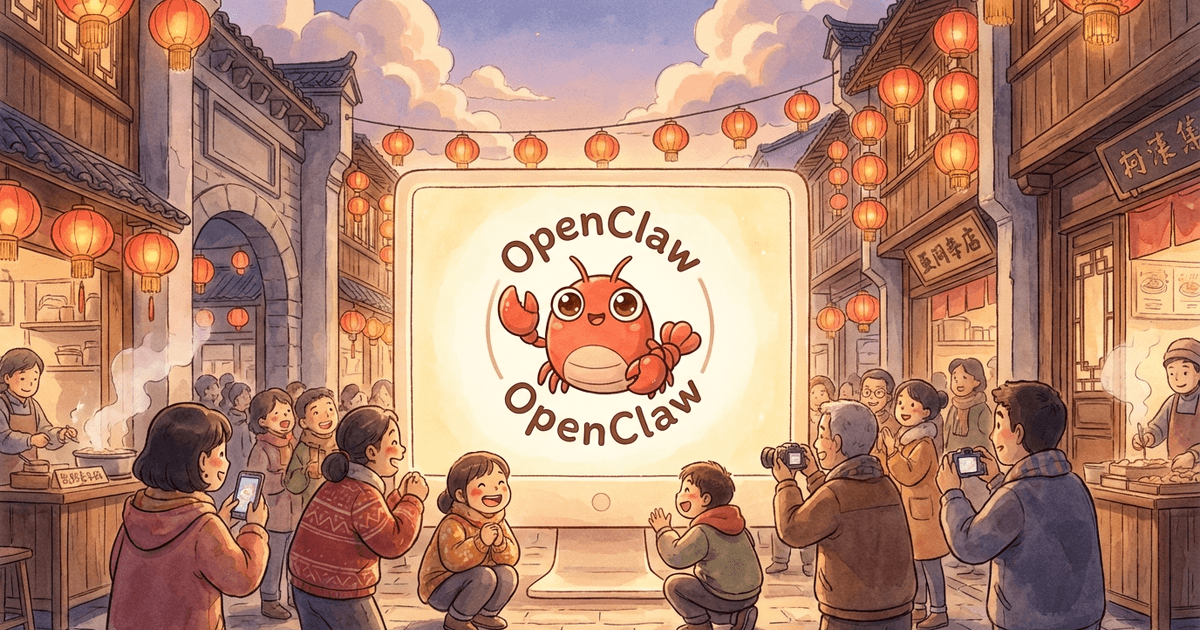
But in China, AI enthusiasm is spreading in a different form. That is the so-called OpenClaw fever, known in Chinese as 養龍蝦 (raising lobsters).
In China, OpenClaw is not just a developer tool. It has drawn in local government subsidies, cloud support, and startup enthusiasm, creating something close to a social phenomenon. Reuters reported that multiple Chinese cities including Shenzhen are trying to build industries around OpenClaw.
What matters is that Alibaba, Tencent, and ByteDance are each rushing to figure out how to monetize AI in response to this fever — each in their own way.
In my view, China’s AI landscape has shifted into a monetization race and an agent implementation race.
What Is Happening in China
1. OpenClaw Fever in China — “Raising Lobsters”
OpenClaw’s icon is a lobster (龍蝦 in Chinese), so installing the tool and letting it work autonomously on your PC is compared to “raising” or “farming” one.
-
Why it exploded: Instead of just a chat UI, people started setting up dedicated machines like Mac minis as “lobster homes,” running file operations, email sending, and other real work tasks 24/7. This style became a trend among Chinese business owners and engineers.
-
Why “raising”: The process of setting up the tool, adjusting prompts and permissions to fit your work — it feels like raising a pet. That is where the name comes from.
(Reference: CommonWealth Magazine — What is OpenClaw “Raising Lobsters”?)
According to Reuters, multiple tech cities and manufacturing hubs in China have started building industrial policies around OpenClaw. In Shenzhen and elsewhere, subsidies and support programs have appeared. OpenClaw is no longer just a toy for some engineers — it is becoming a phenomenon tied to regional economic revitalization and the one-person company narrative.
According to The Information, ByteDance is supporting the operation of ClawHub, the Chinese version of OpenClaw’s marketplace, and providing cloud servers. OpenClaw’s official team has also mentioned ByteDance’s cloud division providing “infra sponsorship.”
What is interesting is that as OpenClaw fever has intensified, big tech companies have started competing to claim ownership and absorb the ecosystem. Tencent launched an unofficial SkillHub and faced criticism from the OpenClaw community, then reportedly tried to repair the relationship through donations and executive meetings.
2. Tencent Is Pushing AI Agents into Mass Distribution Through WeChat
Tencent’s strength lies not in models alone but in distribution power. According to Reuters, Tencent is integrating OpenClaw-related features into WeChat, trying to spread AI agent usage across its 1 billion+ user base.
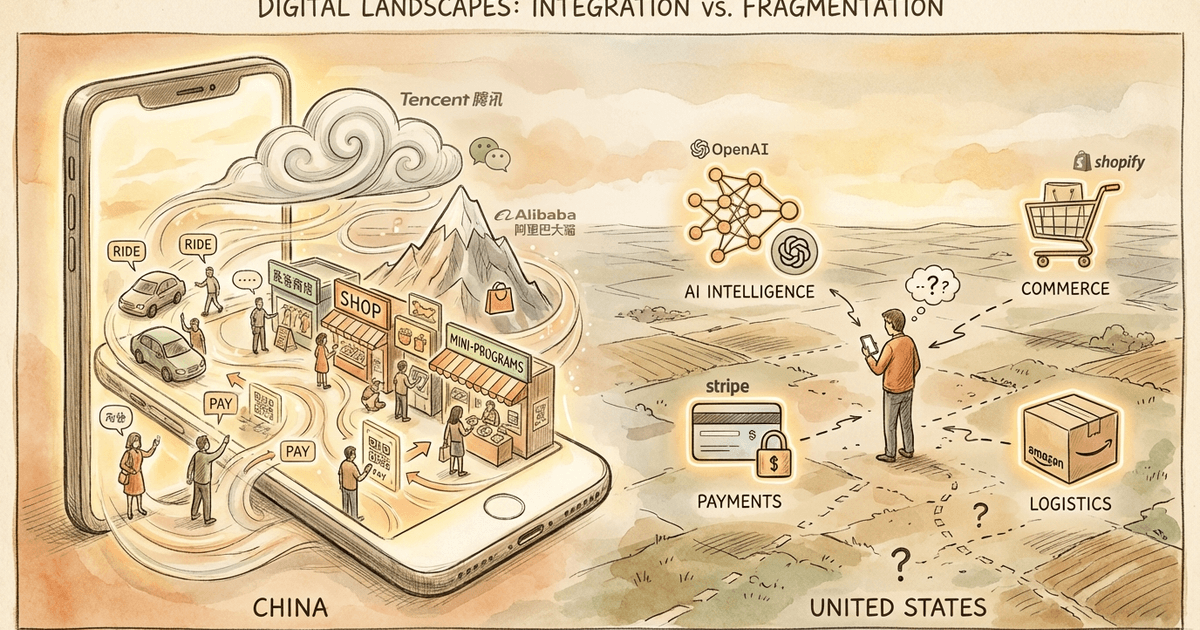
This is different from US-style B2B monetization. In China, instead of making people install new AI apps separately, the strategy is to embed AI into existing super apps.
In the US model, chat, sales, and payments exist across separate companies horizontally. Chinese companies can do vertical integration within a single company. That is why this approach works.
The strength of this distribution channel is significant when thinking about the competitiveness of Chinese AI.
3. Alibaba Reorganized AI Under the CEO and Is Strengthening B2B Monetization
In March 2026, Alibaba consolidated its major AI operations into a new division called Alibaba Token Hub, placed directly under CEO Eddie Wu. This includes Tongyi/Qwen R&D, the consumer-facing Qwen app, and the enterprise AI agent Wukong. Reuters also reported on this reorganization.
(Reference: Alibaba Group official announcement)
4. Alibaba Is Shifting from Open-Source Champion to Closed-Source Monetization
What should not be overlooked in this reorganization is the departure of Lin Junyang, the key researcher who led Qwen development. Reuters reported Lin’s resignation in March, and the CEO-led reorganization followed shortly after.
Looking at the timing alone, it feels like Alibaba is moving from the phase of “building presence through open models” to a phase focused on monetization, enterprise Agentic AI, and closed models.
According to The Information, Alibaba has since shifted high-performance Qwen models toward proprietary offerings and strengthened enterprise billing through Wukong and Model Studio.
Alibaba had long built its presence through open Qwen models. But recently, high-performance models like Qwen3.6-Plus and Qwen3.5-Omni are being positioned as proprietary, with stronger enterprise billing. Qwen3.6-Plus in particular highlights agentic coding and practical business use.
This shows that the pattern of “gather developers with open models, expand the ecosystem, then harvest revenue by making the best models closed” is becoming clear in China as well.
5. ByteDance Is Gaining Presence Through Speed and Infrastructure Support, but Haste Is Also Showing
While ByteDance supports the Chinese distribution platform for OpenClaw, it also drew attention for copyright issues around its video AI model Seedance 2.0. According to The Information, major US studios including Disney sent cease-and-desist requests to ByteDance, and ByteDance subsequently suspended its global rollout.
ByteDance is very strong in speed of implementation and distribution. But it also shows that the “ship first, fix later” approach typical of Chinese tech can surface as copyright and safety issues.
Organized by Theme
Here are the four themes I want to examine.
1. OpenClaw Fever
OpenClaw fever, symbolized by the “raising lobsters” phenomenon, reflects the expectation that individuals and small businesses could dramatically boost productivity using AI agents. It is less of a passing trend — the driving force is the expectation that “AI could work on my behalf and I could achieve big results alone.”
In China, this expectation has not remained just individual enthusiasm. Combined with local government support, startup incubation, and cloud companies competing to capture the ecosystem, OpenClaw has become a social phenomenon tied to regional economies and new entrepreneurial models, not just another open-source tool.
In other words, OpenClaw fever in China should be seen not as a temporary trend in the tech community, but as a phenomenon where the expectation of “earning with AI agents” and “replacing work with AI agents” is spreading across society.
2. Embedding AI Agents in Super Apps
This is where Tencent has its strength. Having the WeChat channel is close to an “OS-level” position for AI in China — because AI can be embedded into existing daily workflows rather than asking people to install new apps.
In the US, new AI services often launch as standalone apps. In China, embedding AI into existing massive platforms allows rapid adoption.
A super app like WeChat is not just a messaging app — it is an ecosystem where daily life, payments, business communication, and mini-programs are already consolidated. Having AI agents enter this space means AI is getting closer to becoming a daily agent, not just a convenience feature.
The strength of Chinese companies lies not only in model performance competition, but in being able to quickly channel AI into existing massive distribution networks.
3. Monetization
Alibaba is the clearest example. The CEO-led reorganization, Wukong deployment, and closed model strategy all read as a shift to monetizing AI for enterprises.
What matters here is that Alibaba has shifted its focus from just “making good models” to how to turn them into recurring revenue. From the phase of attracting developers and attention with open models, they are moving to the phase of locking in higher-performance models and agent features for enterprises, billing through cloud and business usage.
In China too, AI is no longer just “R&D output” — it is entering the phase of turning into money through cloud usage, enterprise productivity, and operational efficiency.
While Tencent is strong in distribution and ByteDance gains presence through infrastructure support and fast implementation, Alibaba appears to be leaning more clearly toward a B2B monetization model.
4. Risk
This is very important. OpenClaw-style agents tend to require broad permissions as the flip side of their convenience, and they have security vulnerabilities.
In the Chinese-speaking world, the risky aspects of OpenClaw are called “poisoned lobsters” (毒龍蝦), and the movement of giving up and abandoning them is called “棄養潮” (abandonment wave). (Reference: Business Next — AI Agent Security Risks)
The specific risks include:
-
Cost poisoning from “overwork” (API bankruptcy): Since AI agents operate autonomously, they can “voluntarily work overtime” all night running complex analyses, resulting in API bills jumping to tens of thousands of yen by morning.
-
Prompt injection (external poisoning): Hackers can hide malicious instructions in websites or files. When an AI agent reads them, it may send secret keys or confidential data to external servers.
-
Permission runaway (misinterpreted instructions): When AI is given too much permission (file deletion, email sending, etc.), it can misunderstand context and delete important data or send inappropriate content externally — becoming a “digital insider threat.”
-
Plugin poisoning (tool contamination): Malicious code embedded in OpenClaw extensions (plugins) can turn your PC into part of a zombie network or allow remote control the moment you install them.
Reuters reported that Chinese authorities have warned state-owned enterprises and government agencies to be cautious about using OpenClaw.
Looking at China’s AI competition from this perspective reveals clearer differences from the US approach.
My View
I believe China’s AI strength lies not just in model performance, but in the speed of turning hype into implementation and revenue.
In the US, Agentic AI adoption is progressing more in the context of enterprise operational efficiency, and implementation and deployment seem to take relatively more time. In China, when a social phenomenon like OpenClaw fever occurs — or when a path to monetization becomes visible through existing AI models or AI agents that combine them — the major platforms move immediately to integrate it into their distribution networks, cloud services, and existing products.
For example:
- Embedding into super apps like WeChat
- Making it standard in their own cloud services
- Implementing AI agents on their platforms and selling to existing customers
- Closing high-performance models to strengthen enterprise billing
The speed of commercializing AI and turning it into revenue is remarkably fast.
From an investor perspective, this speed is attractive. Because it is not just R&D — these companies have the ability to embed AI into existing massive ecosystems, increase usage, and convert it into cloud billing, advertising, and business charges.
This appears somewhat in contrast to the US, where concerns persist about monetizing the enormous investment in AI data centers and infrastructure.
However, I also believe strong caution is needed. OpenClaw-style agents touch files, email, internal data, and sometimes even payments and external operations.
AI agents that operate autonomously 24/7 can work very fast in a positive direction, but when security risks occur, they can also cause damage at the same speed.
If this is integrated into the center of massive economic zones like Alibaba’s or Tencent’s, the impact of data leaks or agent runaway incidents could be immense.
If quality and safety are deprioritized in favor of hasty expansion, there is a real risk that the scale of any incident could grow very large.
Summary
China’s AI landscape today is one where Alibaba, Tencent, and ByteDance are each competing in different ways to “turn AI into money,” against the backdrop of OpenClaw fever as a social phenomenon.
Tencent is trying to make AI a daily interface within its own economic zone. Alibaba has made its B2B AI monetization strategy clear through CEO-led reorganization, closed models, and Wukong deployment. ByteDance appears to be monetizing AI within its existing massive commercial flows by layering AI onto TikTok/Douyin’s advertising, e-commerce, and shopping channels.
However, behind this momentum, problems are also growing — OpenClaw’s permission risks, immature quality and safety practices, and hasty implementation around copyright issues.
Going forward, the question will shift to whether companies can integrate AI fever into their economic zones, turn it into recurring revenue, and do so sustainably without causing major incidents.
Join the conversation on LinkedIn — share your thoughts and comments.
Discuss on LinkedInRelated Posts
Tencent's WeChat AI Agent — Why China Has a Structural Edge in Practical AI

Part 1. Setting Up OpenClaw on a Cloud Server — Why Costs Hit $10 a Day