What It Means That Nvidia-Backed Nscale Is Pursuing an 8GW Data Center Site
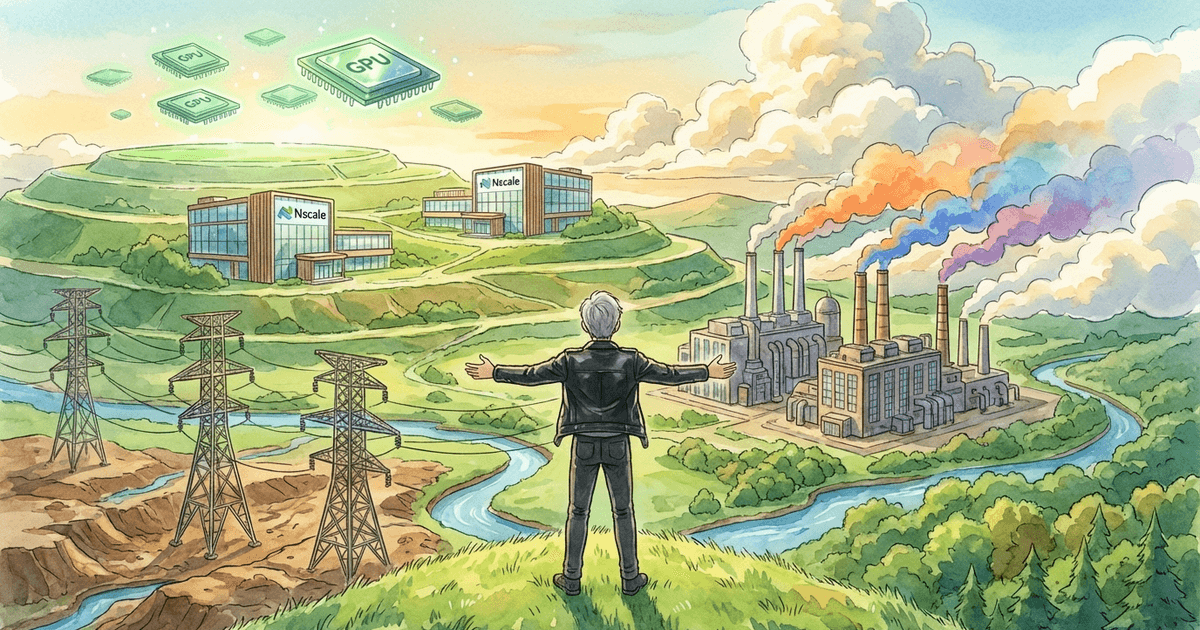
The West Virginia deal shows that the race for AI infrastructure dominance now extends to the physical layer beneath GPUs.
Nscale, a UK-based AI cloud company backed by Nvidia, is reportedly negotiating to acquire a large-scale AI data center site in West Virginia. At first glance, this looks like a straightforward land acquisition by an emerging cloud company. But the real significance of this news goes beyond GPU demand growth.
What matters is that Nscale is not just looking for a place to install servers. The target is an asset that encompasses land, buildings, power generation, permits, and local coordination — the physical layer of AI infrastructure itself. And behind this move sits Nvidia’s backing. This suggests that the battle for AI dominance has moved beyond models and chips, down to power supply and deployment infrastructure.
The Information reports that Nscale is negotiating to acquire American Intelligence & Power (AIP), which holds a major AI data center site in West Virginia. The report also notes that Nvidia is a major shareholder in Nscale, having held more than 10% at one point.
What We Can Confirm
1. Nscale’s Target Is Not an Ordinary Data Center Site
The site in question is the “Monarch Compute Campus” in Point Pleasant, West Virginia. Data Center Dynamics has also reported that Nscale is in talks to acquire this 8GW campus.
According to West Virginia Public Broadcasting, the project targets an initial 2GW by 2027, scaling up to 8GW by 2030.
8GW is a number on a completely different scale from typical data center projects. For context, OpenAI’s Stargate is expected to reach about 1.2GW at completion. The Monarch plan would far exceed that. At this point, it’s clear this is not simply about “finding a place to stack GPUs.”
2. The Key Feature: Self-Contained Power
According to a press release from AIP and Caterpillar, the Monarch Compute Campus is designed as a behind-the-meter configuration, with 2GW of dedicated power that does not rely on expanding the existing public grid.
This is different from the standard model of leasing land, receiving power from external utilities, and installing servers. The important point is that land, buildings, power facilities, and control systems are designed as an integrated package.
3. Nscale Is Already Scaling as an Nvidia-Backed Neocloud
According to Reuters, Nscale raised 14.6 billion valuation. The company lists Microsoft and OpenAI among its customers.
A separate Reuters report notes that Nscale has hired Goldman Sachs and JPMorgan in preparation for an IPO.
In other words, this West Virginia deal is not an early-stage experiment. It appears that an Nvidia-backed neocloud is now at a stage where it is securing capital market access while moving to lock down physical assets.
What’s Happening at Each Layer
Semiconductor Layer
Nvidia’s strength has traditionally been understood in terms of GPU supply, and that remains true. But what this news reveals is that Nvidia may be extending its influence beyond just selling chips — reaching toward the places where those chips are deployed and the power infrastructure that runs them.
Cloud Layer
Nscale is positioned alongside CoreWeave and Lambda as part of the neocloud wave. These companies are less invested in proprietary silicon than the major hyperscalers, making them important customers for Nvidia. From Nvidia’s perspective, nurturing these emerging cloud providers also helps diversify its customer base.
Physical Infrastructure Layer
This is the core of the story. The Monarch Compute Campus is not just a building — it’s a project where power supply and compute infrastructure are integrated. If Nscale secures this asset, it moves beyond being a GPU rental business toward becoming an operator that controls land, buildings, and power.
Even if Nvidia doesn’t directly own data centers, the result is a structure where Nvidia-aligned players control the physical foundation. I think this is the real significance of this news.
Policy and Local Coordination Layer
This deal is not just about technology. West Virginia is actively pursuing data center development and microgrid infrastructure. The governor’s announcement emphasizes regulatory frameworks and attracting large-scale investment.
The value of this site lies not in the land itself, but in how quickly and in what form power and compute facilities can be brought online. The permits and political coordination that make this possible are part of what makes this asset valuable.
My Take
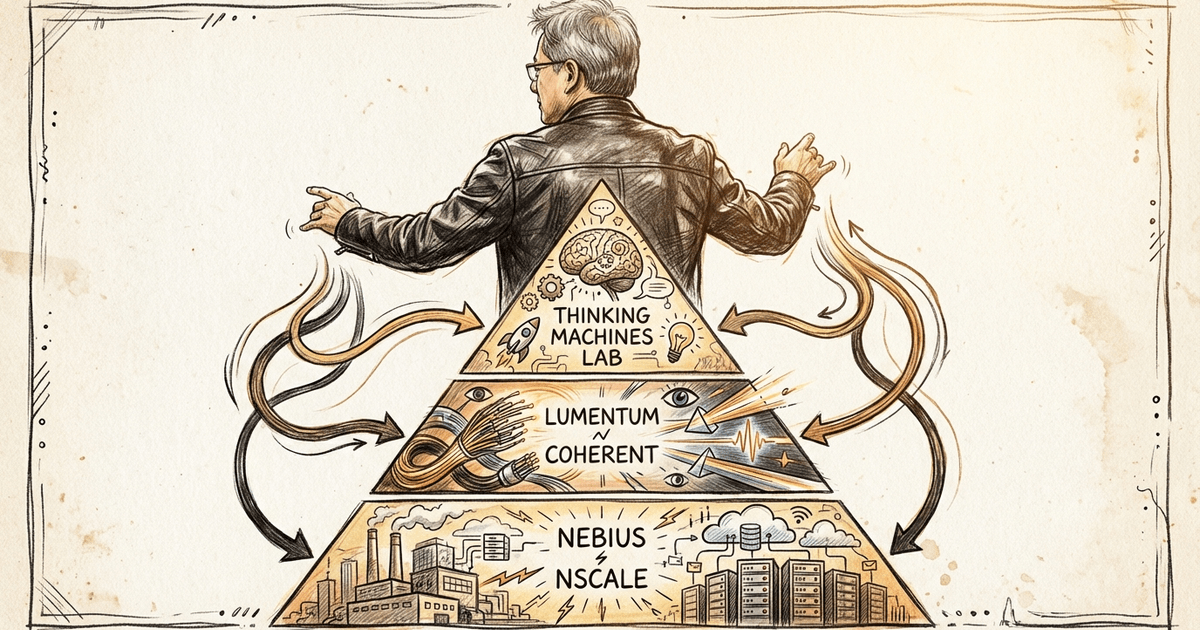
In my view, this move suggests that Nvidia is working to align the major layers of AI infrastructure closer to its own ecosystem. In other words, it appears to be deepening its involvement from simply supplying GPUs to encompassing the cloud services that need those GPUs, and further down to the physical foundation that supports those cloud services.
What has been reported so far is that Nscale, an Nvidia-backed company, is negotiating to acquire AIP — not that Nvidia is acquiring Nscale. And the 8GW figure is a plan, not a completed facility.
Still, what makes this news significant is that it shows the focus of AI infrastructure competition has moved beyond semiconductor performance to who secures the land, who secures the power, and who can actually build and deploy at scale.
What’s particularly interesting is that the players at the forefront are not Amazon or Google themselves, but Nvidia-backed emerging cloud companies. This is a shift that cannot be fully explained by the hyperscaler-centric view alone.
Alternative Perspectives
That said, it’s worth considering other angles.
First, rather than being a unique strategic move, this could simply be a natural result of vertical integration driven by power becoming the most critical constraint of the AI era. Both large incumbents and startups are being forced to move closer to self-contained infrastructure because relying on external suppliers is no longer fast enough.
Second, 8GW is an enormous number. Reaching full scale would require adequate funding, demand, equipment procurement, and construction capacity. The ambition of the plan and its eventual realization should be considered separately.
Third, announcements from AIP and related companies naturally contain promotional elements. Terms like “behind-the-meter,” “unregulated utility,” and “America’s first” are better treated as the company’s own characterizations rather than established facts.
Summary
The Nscale deal is more than just a large project by an emerging cloud company. Nvidia-backed Nscale pursuing an 8GW site in West Virginia signals that AI infrastructure competition has moved beyond semiconductor supply and cloud expansion — down to the physical layer beneath.
Of course, this is still at the negotiation stage, and Nvidia itself does not directly own this asset. The 8GW figure is a plan, not a completed reality.
What matters is that this deal illustrates, in very concrete terms, that the battle for AI dominance has descended from models and GPUs to land, power, and the ability to deploy at scale.
Join the conversation on LinkedIn — share your thoughts and comments.
Discuss on LinkedInRelated Posts
NVIDIA Strengthens Its Grip on AI Infrastructure Through Startup Investments

How I See Meta's AI Strategy as an Investor — Business Realignment, Massive Capex, and the Value of Data Center Assets